

Like a lot of people, I used to be skeptical of our military and government bureaucracy. From the outside, it can look like a lot of red tape and wasted resources. I often held the view that if something truly catastrophic happened, we were all just sort of on our own.
That changed when I saw the inside of Emergency Management through the eyes of my husband, Ken Church.
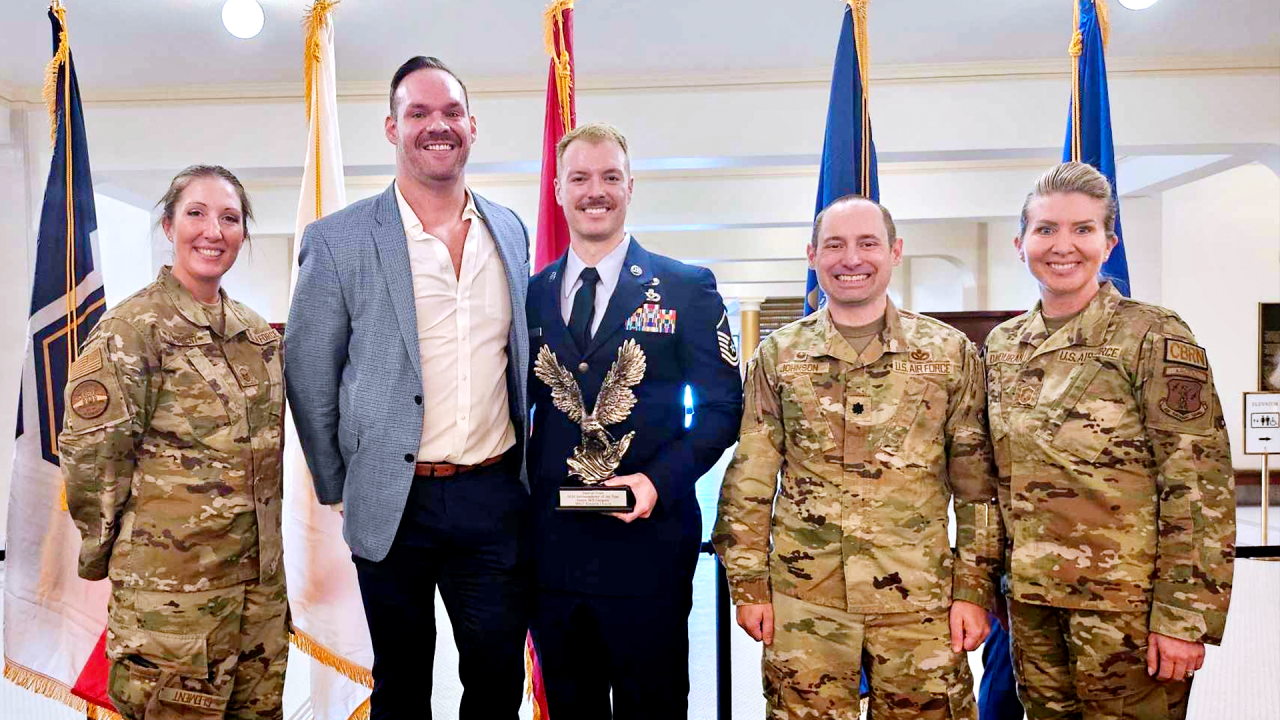
Ken serves in the Utah Air National Guard, and in 2024, he was recognized as the Senior Non-Commissioned Officer of the Year for the state. He didn’t win that for sitting around. He won it for rewriting Emergency Operations Plans, certifying Airmen and Marines in joint training events, and creating the Wing’s first Electromagnetic Pulse (EMP) Checklist to protect essential resources.
Watching Ken work opened my eyes to a fundamental truth about the military that applies directly to business and life: They don’t just have a plan in a binder on a shelf.
They spend an immense amount of time exercising. They run drills. They simulate disasters. They don’t plan for the exact thing that will happen—because you can’t predict the future—but they practice the act of decision-making. They flex the muscle of uncertainty so that when chaos actually hits, they aren’t paralyzed. They can think on their feet because they’ve practiced thinking on their feet.
Preparedness is a Muscle, Not a Document
We tend to think of “being prepared” as a state of being. You either are, or you aren’t. But preparedness is actually an activity. It is a muscle you have to routinely work.
I’ve seen firsthand how doing live tests helps uncover problems you would never think of sitting in a conference room.
For example, imagine you lose all power and electronic communications. You have to rely on runners to relay messages between teams. In theory, that sounds simple. But in a live exercise, you realize: How do I know if this runner has the latest order? How do I verify that this instruction supersedes the one I got ten minutes ago?
You might not realize you’d run into a scenario where you’re getting conflicting information—and have no system to handle it—if you hadn’t gone through the physical practice of “how do we communicate” when the lights go out.
I was recently listening to futurist Amy Webb, and she nailed this concept. She said, “The goal is to be prepared for anything, rather than being prepared for exactly everything.”
This is the “What If” mindset. It isn’t about having a crystal ball. It’s about running scenarios so you aren’t blindsided when the landscape shifts.
The High Cost of Reactive Planning
When we don’t practice this “What If” mindset, we react out of fear. Webb shares a powerful cautionary tale about the West Virginia coal miners.
When the coal industry began to collapse, the reaction was panic-driven. The solution proposed was: “Teach them to code!” Specifically, teach them HTML. It sounded like a plan, but it was a reaction to FOMO (Fear Of Missing Out) rather than strategic foresight.
By the time this initiative launched around 2015, basic HTML coding was already being automated. The initiative failed because it ignored market realities. If leaders had been running “What If” scenarios years prior, they might have seen the automation wave coming and focused on transferable, future-proof skills instead.
Lack of preparedness leads to reactive, bad decisions.
The “Death Packet” and Business Continuity
So, how do we apply this mindset of active preparedness?
On a personal level, Ken and I have what we call our “Death Packets.” It sounds morbid, I know. But it is actually the ultimate act of love. If one of us passes, the other will be overcome with grief. In that state, even small decisions feel impossible. The “Death Packet” contains everything needed to navigate that time without having to think—passwords, accounts, insurance policies, and wishes. It removes the burden of decision-making during a crisis.
In business, we call this continuity planning. If you or a key leader stepped away tomorrow, is there a “packet”? Or does the institutional knowledge walk out the door with the person?
The Era of the Never-Ending Layoff
But there is another crisis we need to prepare for, one that is becoming disturbingly common.
As I’ve written about before, I believe our country is undergoing a crisis in leadership values. In 2026, I predict we will continue to experience the endemic of layoffs. They are no longer stigmatized like they used to be; instead, executives now use them as a short-term tactic to manipulate income statements and balance sheets in an effort to raise stock prices.
I think about my friend Lee Payne. He often shares a story with Westminster students and alumni that always sticks with me. Years ago, he was laid off only a few weeks after starting a new job and having his first child. Because he was so new, he received zero severance. The situation wasn’t easily foreseen. It was the 2008 financial crisis, things were looking “good” until they weren’t. It was completely out of his control and had nothing to do with him. It was a brutal wake-up call that no matter how talented you are, you are vulnerable. When he mentors students and alumni now, he shares a specific rule of thumb for financial and mental preparedness:
Plan for one month of job searching for every $10k in salary you earn.
If you are looking for a $100k role, you need to be prepared to survive for 10 months without a paycheck. In tougher markets, some experts suggest planning for 2-3 months for every $10k.
The reality of the modern workforce is that you cannot rely on performance, loyalty, or tenure to protect you. To survive this era, you have to prepare before the pink slip arrives:
- Build a Nest Egg: You need a “Freedom Fund” that can cover you when the severance package (if you even get one) runs out.
- Diversify Your Income: Develop side hustles and secondary streams of income. If your W2 is your only source of money, you have a single point of failure.
- Upskill Aggressively: Don’t wait until you are laid off to learn the tools of the future. Upskill now in high-demand areas like AI, Machine Learning, and Data Science.
Future employers are looking for specific skills. If you don’t have them, you end up in the pile of the thousands of resumes most employers receive for current openings. Don’t wait for the crisis to try and get yourself out of that pile. Do it today.
Preparing for 2026: Taste and Connection
We are in one of the most transformative times of our lives. Between AI and geopolitical shifts, the next decade will look nothing like the last.
So, how do you prepare for a 2026 you can’t predict? I think it comes down to doubling down on the things machines can’t do.
- Cultivate “Taste”: As Nichol Bradford notes, AI raises the floor of competency for everyone. To stand out, you need deep thinking and “taste”—the ability to discern quality and strategy that a machine can’t replicate. Don’t just be part of the “people pile” of generic resumes.
- Deepen Your Connections: If 2024 and 2025 have reminded me of anything, it is the power of a network. All of my new business in 2025 came from past colleagues and current clients helping me expand.
You can’t control the economy. You can’t control the tech landscape. But you can control the strength of your relationships and your readiness to pivot.
The Takeaway
Plans on paper mean nothing if you don’t go through the process of planning.
Don’t wait for the crisis to check your readiness. Flex the muscle now. Ask yourself “What If?” this week. Not to scare yourself, but to prepare yourself.
A Final Holiday Wish
While we prepare for the “what ifs” of the future, we can’t forget to live in the “right now.”
I hope you get to take some time off these next two weeks to unplug and spend time with your loved ones.
If this year has taught me anything—especially after losing my best friend Kody earlier this year—it is the importance of living in the present. Tomorrow is not promised.
So, take the trip. Reconnect with that friend. Bury the hatchet. Tell someone how much you love and appreciate them.
I wish you and yours a wonderful holiday season and a happy New Year.
See you in 2026, Seth

A Note on Process & Transparency:
In the spirit of transparency, I partnered with Google Gemini 3.0 as a thought partner and editor to help structure this issue. I also used Google Gemini’s Nano Banana Model to generate the holiday card above (a fun experiment in how creative tools are evolving).
As I always say, AI isn’t going to take your job, but people who leverage AI to their advantage will. Be one of those people.


