

Hey everyone,
This month, MarTech Seth takes a detour into economic history—specifically, tulip mania. Unless you’re an economics nerd like me, you might not know about this 17th-century Dutch frenzy where folks mortgaged their houses for a single tulip bulb. Seriously! The bubble burst, and while the Dutch economy survived, countless individuals were financially ruined.
Sound familiar? My former professor, John P. Watkins , taught me all about it in my History of Economic Thought course. It’s easy to laugh at those silly Dutch folks, but I see echoes of tulip mania today—in the AI hype, the crypto schemes, and the endless chase for the next shiny object.
So, what can we learn from this historical oddity? Here are a few key takeaways:
- The “Greater Fool Theory”: People weren’t buying tulips because they loved them. They were buying them because they thought someone else would pay even more later. It’s the classic “greater fool” scenario.
- Not a Total Collapse (But Still Bad): While the Dutch economy didn’t completely implode, countless individuals lost their fortunes. It’s a reminder that even if the overall system survives, you can still get wiped out.
- A Cautionary Tale: Tulip Mania remains a significant historical example of a speculative bubble and its consequences, serving as a cautionary tale about the dangers of unchecked speculation.
These lessons about human behavior have stuck with me throughout my career. My early career mentors, Erni Hernandez Armstrong, Jason Harrison, and Flo Zeuthen, CSM at Freestyle Marketing Group taught me a great deal. Two of my most important takeaways from my time at Freestyle (my first “real” full-time job in advertising) were:
- Always be curious
- Tactics, tools, and technology change, but human behavior? That’s a constant.
It’s a tale as old as time, but it’s playing out on a new stage. With technological shifts and the rise of social media, it’s easier than ever to lose sight of what’s truly important. The “always-on” work culture, the 24/7 news cycle, the constant pressure to have the “newest thing,” the latest fashion, the biggest house…the constant influx of social media posts and distressing news designed to invoke emotions of rage and fear—these are all weapons of mass distraction, fueled by our own desires to keep up with the Joneses, pulling us away from what truly matters.
Now more than ever, I see a lot of folks falling victim to these distractions and forgetting what’s truly important. It’s like we’re all wandering through a digital funhouse, constantly bombarded with flashing lights and loud noises, struggling to find our way back to the exit.

You Can’t Take It With You
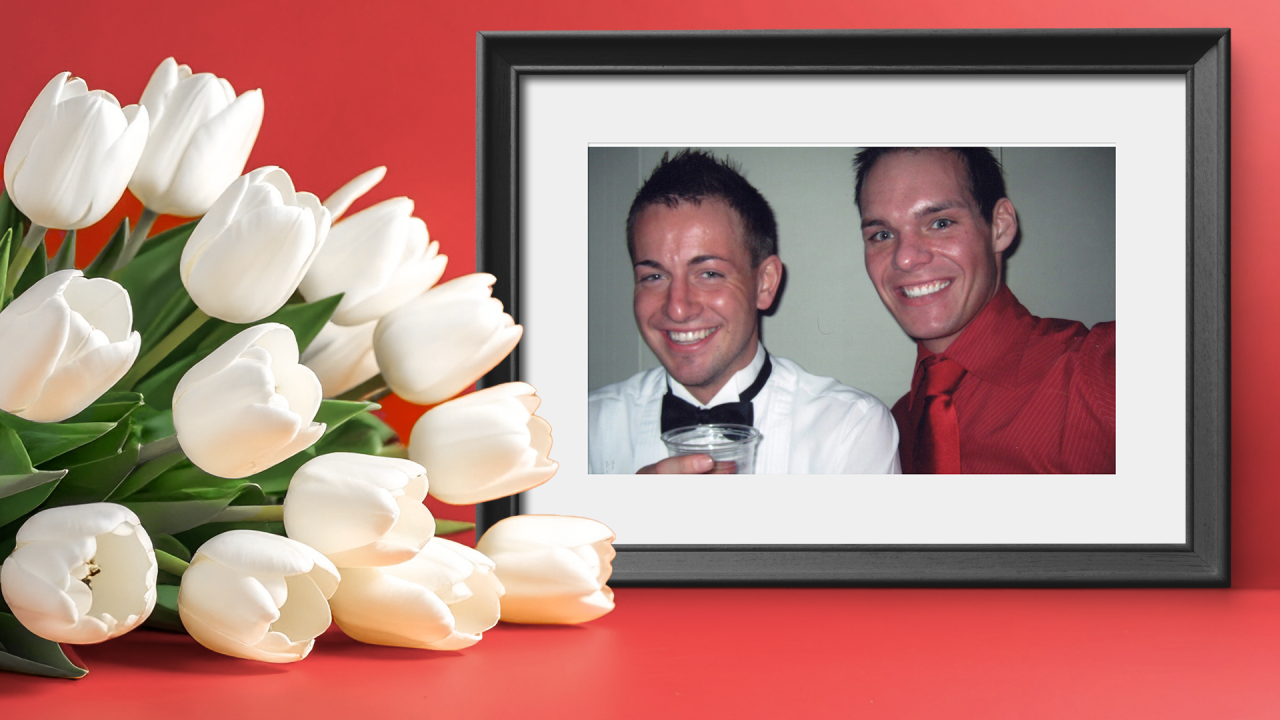
Recently, I lost one of my closest friends, Kody Nilsson unexpectedly. It’s been a gut-wrenching time, and it’s made me think about what Kami, his sister, said at his service—about how Kody lived life “out loud,” with full-hearted enthusiasm.
It got me thinking: what are we really chasing? Are we working ourselves to the bone just to buy more stuff? Are we peddling schemes and hype cycles for…what? A bigger pile of cash that’ll be worthless when the bubble bursts?

Kody understood something fundamental: our most precious resources aren’t money or possessions (you can’t take any of that with you—it’s just stuff). They’re our time, our attention, experiences, and the people we share them with. You live on through the memories others cherish of you—long after you have left this earth.
The 4 P’s of a Life Well-Lived
I’ve always found the traditional marketing 4 P’s (Product, Place, Price, Promotion) helpful in my career. But lately, I’ve been leaning on a different set of P’s—ones that Kody embodied. I even use these to evaluate companies I work with, projects I pursue, and causes I support:
- People: Surround yourself with folks who lift you up, who challenge you, who challenge you, and who remind you what truly matters. Kody was that guy for me. Are you helping people or are you hurting people? In your daily life, are you truly lifting people up, not just chasing the next metric?
- Process: Create systems that work for you. Whether it’s daily habits or workflow improvements, success is about consistent execution. You might have goals, but unless you have a routine process for getting work done, those goals are just ideas.
- Problems: Look for real issues you can solve. Don’t chase shiny objects or jump on every trend. As I have written about recently, and feel like I’m discussing with friends, colleagues and clients on repeat—technology should solve actual problems, not just showcase cool features.
- Priorities: Know what matters most. Your career is important, but it’s just one piece of life’s puzzle. Family, friends, colleagues, and loved ones—people should always be among your top priorities. In my client work, I try to partner with organizations that are making a positive impact on the world. As a young professional starting out, you may feel like you don’t have a choice who or what forces you work for. I’m here to tell you… you ALWAYS have a choice.
Karma’s Got a Funny Way of Working Things Out
I’ve recently been approached by short term installment loan fintechs (think high-interest installment loans for a burrito, television, or car tires), online sports betting companies, and other organizations who don’t embody my core principles. A few years ago, I may have considered working with those organizations—I thought I needed the money.
Not anymore. No matter how large the contract, I choose to partner with organizations that reflect my core principles. Stay true to your core values and priorities, and don’t get caught holding—or leaving someone else holding—the short end of the stick. Karma has a way of always making its way back around to you.
A Word of Caution: Chasing Fool’s Gold
Growing up in Utah, I was surrounded by a culture that often equates financial success with spiritual blessing. If you’re from Utah, you’ve probably had someone approach you about being the “CEO” of your own business, for a small investment of a few thousand dollars. Utah is often referred to as the “unofficial capital of multi-level marketing” capital of the United States. My dad used to call these schemes “milking the Mormons”—Amway, Mary Kay, doTERRA, and other get-rich-quick pyramids. He cautioned me to stay away. Fun fact, Utah also is among one of the highest in white collar crime (ranked 10th in the united states in 2024) and has the highest personal bankruptcy filing rate (per household) in the nation. Financial success has nothing to do with your spirituality.
Online influencers, brand deals, AI, crypto, fitness and personal wellness coaching…some might be legit, but most of this is all hype. What in the world can some guy do to tangibly improve your life that is worth $8,000 in a coaching fee? I’m sure this “coach” has great success stories. I personally believe and have benefited from group coaching and personal development. There is a line that gets crossed when you go from helping to exploitation—selling snake oil promises you can’t possibly fulfill. In my experience, the successful “protégé” usually are and would have been successful on their own without the high-ticket personal development course.
Ahem…”mister influencer”…how about you pay your vendors on time and treat them fairly?
It’s all fake…leveraged debt. The McMansion, the $160,000 luxury cars…and for what? You work so much to buy stuff you get golden handcuffs, losing sight of what really matters. One of our close family friends was the city manager for Farmington (the town I grew up in). He would often tell us
“those mansions on the bench… they are usually the ones to get their water or power shut off first… don’t feel less than because your family doesn’t have expensive cars or an expensive house. Living within your means is a good thing.”
My First Husband and the Dark Side of Influence
How do I know this? I lived it. My first husband, Brandon Román, was an ambitious associate at Squire Patton Boggs, one of the world’s largest law firms. He eventually made partner after our divorce.
You only know what you know. I got married young, at 25. What I now recognize as clear warning signs and red flags, I initially mistook for ambition—something I admired and what made Brandon seem like a desirable partner. Brandon used to joke that one of his older siblings, a very successful hedge fund manager, had a 12,000 square foot house. His goal? To have a house at least one square foot bigger.
In law school, Brandon had been a ‘big brother’ of sorts to Daniel Honeycutt, a sweet guy who became a close friend of ours. Later, Brandon developed a strange obsession with trying to ‘keep up’ with Daniel and his husband Justin.
When they bought a luxury car, we bought one too. When they got a luxury SUV, we followed suit—despite having zero need for a seven-passenger Infiniti QX60. We were two men with two small dogs, for crying out loud. The financial waste was staggering: monthly payments, plus $500 a month just to park it at Brandon’s firm. The kicker? He rarely drove to work, preferring $800-a-month Uber rides so he could work during his commute.
I found the whole thing absurd. He’d throw down his car keys at bars, bragging, ‘I have two Infinitis.’ I’d joke back, ‘Nissan Motor Acceptance Corporation has two Infinitis.'”
This desire for things, this need to impress—it felt like he was trying to fill some emotional void. The sad part was that he was never satisfied. That quick high from buying something new would fade almost immediately. When Daniel and Justin got a new home, Brandon became obsessed with purchasing a new home. Even after I separated him, he was demanding that I co-sign on a mortgage for a property for him and he would find renters. I knew better than to get further financially entangled with him. I appreciated our friend and realtor Emily Gordon for steering Brandon into rentals, against her own financial interest, knowing I was planning on separating him in a few months.

Brandon was modeling me to be what he called, “the first lad.” He wanted me to be a perfect trophy spouse—the Michelle to his Barack, the Chasten to his Pete. He was adamant that I get a graduate degree, pressuring me to take courses even when I wasn’t emotionally or mentally capable of handling rigorous coursework on top of my other responsibilities. Between my extremely demanding job and running our entire household, I nearly failed out of my graduate program. I was under constant pressure for us to be the “power couple.” He would often try to get me to do freelance work for some of his clients, thinking something might “take off” and be a great payday down the road for both of us.
I remember one of his clients was an organization, funded largely by a sole payday lender: CFPB Watch. In an effort to help my freelance design and consulting business, I often did small projects for some of these lobbying associations Brandon represented. I did a logo for Urban Publics (UP) Coalition, a website for National Mall Underground. Then a new client approached: CFPB Watch. At the time, I worked at PenFed Credit Union. I didn’t want my name anywhere near an organization like that. I’m glad I had the foresight to stay away. I think if I had taken the job, I would have felt guilty helping an organization whose goal was to dismantle a watchdog agency designed to protect consumers from predatory financial institutions.
Looking back, I can see how Brandon’s work as a financial services and tax lobbyist changed him. Representing what I can only describe as ‘Sith types,’—truly unsavory characters—took its toll. He lost his way, and I believe that work contributed to his struggles later in life.
Tulip Mania, Then and Now
It’s easy to dismiss tulip mania as a historical anomaly, but the underlying human behaviors are still very much with us. We see it in the AI hype, the crypto schemes, and the endless chase for the next shiny object. It’s a reminder that we need to stay grounded, stay true to our values, and not get swept away by the crowd.
I’m so glad I didn’t put off my trip to see Kody a few weeks ago. It reminds me to take the trip, make the call, do the thing. Don’t waste your time, because tomorrow is never guaranteed. Use every precious hour wisely, remembering that balance and self-compassion are key—perfection is not the goal here.
See you next month,
Seth
“To Know Kody is to Love Kody” Rest In power my Friend 😇


