

In September 2020, my life started spiraling out of control. One of the two high-stakes MarTech projects I was leading had failed spectacularly. The digital agency we’d hired to help launch a text messaging channel in Salesforce Marketing Cloud had overlooked a fundamental flaw in our setup (SFMC geeks, yeah, it was a Contact Builder issue. Journey builder can’t use Mobile Connect without it). By the time we discovered it, we were already in the middle of our peak student lending season.
It was a colossal failure with my name attached to it. And that was just the beginning of my downward spiral.
Then my beloved dog Honey died. Even though my other dog Maggie passed away nearly a year prior due to complications with diabetes, this loss hit me much differently.
I was so consumed by work that I’d missed the early warning signs of Honey’s declining health. Looking back at photos now, her deterioration was painfully obvious. When I finally got her to the vet, they diagnosed kidney failure and rushed us to emergency care. The guilt was crushing—had my work obsession cost my beloved pet comfort and dignity in her final days? Could I have spared her suffering if I’d been more present?
I tried to power through the next day, making major personal and professional fumbles in the process. In classic people-pleaser fashion, I didn’t reach out for help. I just kept trying to meet commitments and put out fires while my mental health deteriorated rapidly.
After over a week of pretending everything was fine, I knew I needed to remove myself from the situation. I sought professional help and took a medical leave of absence for just over a month.
Career Success = Self Worth?
Only my closest friends knew about this leave. I had always tied so much of my personal identity to my career success. The perception that I was failing at work was destroying me.
If I wasn’t succeeding professionally, what value did I have as a person?
During that break, I spent a lot of time reflecting. How did I get here? This wasn’t the first time trying to be everyone’s “hero” at work had put me in a dangerous situation.
Reflecting back, I now recognize that profound loneliness during the pandemic played a significant role in my downward spiral. I spent most of 2020’s summer isolated—living alone to protect my at-risk diabetic mother who often required assistance. While my siblings were similarly dedicated to keeping her safe and faced their own pandemic challenges—managing virtual schooling and prolonged lockdowns with their families—my situation was different. Without the daily companionship they had at home, I found myself primarily alone. In that isolation, work became my substitute for connection. I volunteered for any project available, chasing that momentary rush of validation when someone appreciated my efforts. What I couldn’t see—or perhaps didn’t want to admit—was that this scattered approach was pulling me away from the strategic work that truly mattered. I was drowning in small wins while neglecting the projects that would deliver genuine business impact.
I also let my people-pleasing nature and desire to be liked undermine my effectiveness. Instead of having difficult but necessary conversations with peers, I avoided conflict and tried to steer projects in the right direction through excessive diplomacy rather than appropriate authority—a strategy that ultimately served neither the projects nor my wellbeing.
After my first two weeks on leave, I had to face facts: I was lonely. While visiting a friend in Southern Utah, I found myself at the Washington County animal shelter where I met Jasper. Honey had been 14 when she passed, and after losing Maggie the year before, I’d told myself I wouldn’t get another dog right away. But sitting in that empty house with just my thoughts wasn’t working. I needed something outside myself—a reason to maintain a routine and someone who depended on me. Jasper turned out to be exactly what I needed during that difficult time.
Finding My Way Back
I knew I needed help overcoming my people-pleasing tendencies. I needed practical tools to stop overthinking, speak up without fear, and break the cycle of making unsustainable promises just to appease others in the moment. I’d watched executives at my company transform under professional coaching arranged by our CEO. Their progress made me realize I needed similar support, but tailored to my specific challenges.
In a Business Insider article featuring top career coaches in the U.S., one name jumped out: Melody Wilding. Her research focused on an archetype she called the “Sensitive Striver”—high-achievers who are also more sensitive to emotions, the world, and the behavior of those around them. As I read more about it, something clicked. That was ME!
While one-on-one coaching was beyond my budget, Wilding offered a 3-month long group program called “Resilient” that was within my budget. Former participants raved about it, so I enrolled in her next cohort starting in early 2021.
I realized I needed to stop overworking. Sacrificing my sleep and personal time wasn’t going to solve this situation. A former mentor once told me,
“How is a lifeguard supposed to save someone else if they don’t have their flotation buoy with them and aren’t physically and mentally prepared? If you just run out there and try to save someone, you’ll both drown.”
I needed to take care of myself first.

Setting Boundaries and Rebuilding
That meant establishing boundaries at work. I would start saying no. I no longer could be in meetings all day then spend evenings trying to get my actual work done. This pattern was unsustainable. I could no longer be the hero for every crisis that popped up or problem that needed to be solved. I also needed to give others the opportunity to shine.
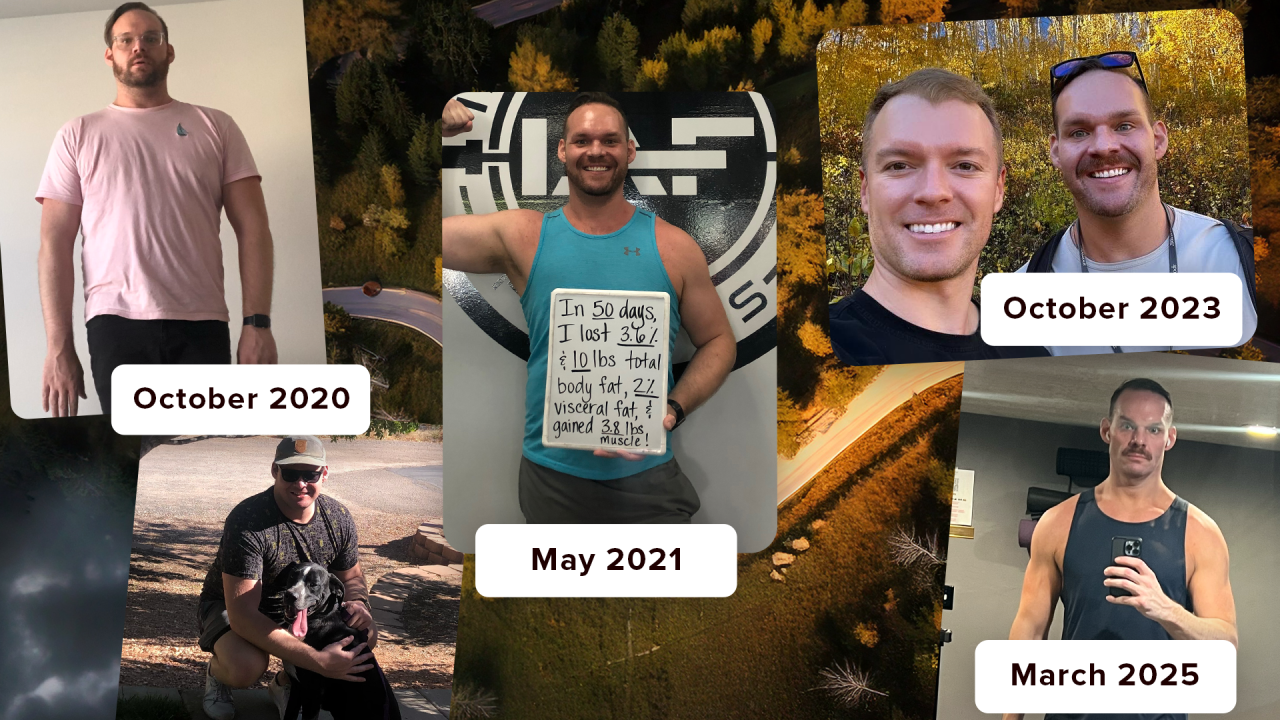
My personal health needed attention too. During the pandemic isolation, I’d gained weight, developed unhealthy eating habits, and was using alcohol as a coping mechanism.
I joined a local fitness community, Iron Allies Fitness, that offered nutrition coaching. My first few months weren’t very successful—I was attending classes regularly, but not seeing significant changes. It wasn’t until I completely revamped my nutrition, properly managed my stress, prioritized sleep, and changed my relationship with alcohol, that things began to change.
The Fresh Start I Needed
By early 2021, I knew it was time for a change professionally. Fortunately, the timing couldn’t have been better. The “Great Resignation” was beginning, companies were embracing remote work, and there were abundant opportunities in lifecycle marketing.
By May, I’d secured offers from two companies: a fintech company with a strong presence in Salt Lake City, and a healthtech startup based in Miami. I eventually chose the healthtech startup because I believed strongly in their mission to combat social isolation and loneliness for seniors and at-risk families.
Sometimes the best option for both you and your team is to move on. You can spend years trying to recover and regain trust, or you can give yourself a fresh start. For me—and what I’d advise for most people—the fresh start was the better path.

The Transformation
Starting my new role brought immediate relief. The constant anxiety disappeared. I had supportive coworkers committed to my success and a supervisor who demonstrated true support rather than empty empathy. In my previous role, offers to help were just words—questions like “How can I support you?” that never translated into actions to reduce my workload or take tasks off my plate. My new supervisor and peers asked the same questions, but followed through with tangible assistance instead of just sympathetic words. This was a stark contrast to the problem-focused “Why can’t you get this done?” or “Can we pay our vendors more to get it done faster?” I’d grown accustomed to hearing.
The change in my stress levels triggered a dramatic physical transformation. I committed myself to completing the gym’s “IRON50 Challenge”—50 consecutive days of 60-minute workouts, 10,000 daily steps, clean eating, no alcohol, and 10 minutes of stretching.
The results were remarkable. By December 2021, I was featured as the monthly spotlight client at my gym. Their words captured my transformation better than I ever could:
“Exactly one year ago, Seth came into Iron Allies for a two-week trial. Since then, he has become a valued member and has had such a positive impact on our community. Not only has he had amazing results, but he has made a difference for others by sharing IAF with friends.”

The numbers told an incredible story: I’d lost 8.8% body fat (23 pounds) and 5% visceral fat, replacing that with almost 13 pounds of lean muscle. My strength gains were equally impressive—progressing from barely completing a pull-up to reaching significant lifting milestones across all major exercises.
I continued prioritizing physical and mental fitness, even becoming a part-time group fitness coach at Iron Allies. After completing their coaching internship program in December 2022, I was offered and accepted a part-time instructor position that I held from January through September 2023. Lesson learned: sometimes personal passions should remain separate from professional pursuits. Converting something you love into employment can change your relationship with it in unexpected ways. That’s a story for another time.
The discipline and resilience I developed through my physical transformation became crucial professional assets as well.
As I rebuilt my body, I was simultaneously rebuilding my approach to work—learning to prioritize sustainable performance over heroic sprints, and valuing my well being alongside my career achievements.
This integrated approach to personal and professional development didn’t just change my physique; it fundamentally rewired how I approached challenges, handled stress, and evaluated opportunities. Little did I know how soon those newfound skills would be tested in the turbulent tech market ahead.
Where I Am Today
Today, I’m still going strong. I’m in the fifth year of maintaining my commitment to living a physically active and healthy lifestyle—a journey that’s transformed both my body and mindset. I’m blessed to be in the fourth year of a loving and committed relationship with an amazing partner who supports my continued growth. While the tech sector has faced significant challenges the past several years (I was part of a large round of layoffs at my former employer last August), I’ve successfully pivoted to a fractional consulting model that gives me both stability and flexibility. This professional reinvention was substantially easier because I had already built strong physical and mental foundations through my earlier personal transformation.
Looking back, I’ve gained perspective on what I once perceived as a devastating failure. The initiative I was so hard on myself about was actually just experiencing typical challenges inherent to complex enterprise software migrations. What I interpreted as personal failure was simply part of the normal implementation journey—the larger migration project eventually succeeded, just on a different timeline than originally planned. The temporary setbacks that crushed me emotionally were, in reality, common speed bumps that most major technical implementations face.
I learned that multiple factors across the organization contributed to those challenges—not just my actions. These experiences taught me invaluable lessons: never place project outcomes solely in the hands of consultants or vendors; maintain control over success factors; and ensure data architecture and hygiene are solid before implementing any MarTech solution.
While I firmly believe in taking accountability for my role in any project, I’ve learned that complex technical challenges should never rest entirely on one person’s shoulders. Both successes AND temporary setbacks belong to the entire project team. Today, when selecting operations, product, data, or engineering project partners, I rigorously verify they either genuinely understand their domain OR possess the humility to acknowledge their own knowledge gaps and demonstrate willingness to learn. This non-negotiable vetting process protects both my projects and my well-being. I’ve lost patience for those who hide behind buzzwords and jargon without substance—people who confidently throw around terms like “data transformation” or “cloud-native architecture” but can’t explain the difference between a relational database and a non-relational database, or an array and a nested property.
Life’s too short to carry both the project and someone’s inflated resume.
Lessons to Share
If I could go back, would I do things differently? I don’t think so. Failure is one of life’s greatest teachers, and I made mistakes I’ll never repeat. These hard-won insights have transformed how I approach both work and life.
🔄 Embrace Failure, It’s Your Best Teacher
Missteps and setbacks are part of life. The only way to completely avoid mistakes is to never try anything new. Don’t let fear of failing paralyze you when facing challenges or obstacles. What truly matters is how you adapt and pivot. Your response to challenges will set you apart and drive success in both personal and professional realms.
Scaling success is easy—navigating failure is where real growth happens.
❤️🩹 Practice Self-Compassion When Things Go Wrong
If I had $20 for every time I was unnecessarily hard on myself before learning self-compassion, I’d be retired on a remote Caribbean island by now. Being your own harshest critic serves no productive purpose. Give yourself the same grace and kindness you’d naturally extend to others. You are, after all, only human. We’re designed to learn through mistakes, not achieve perfection.
📊 Treat Your Life Like an Investment Portfolio
If you were approaching your life like an investment strategy, you would never put everything in one stock. The same applies to your career. Be sure to invest in personal relationships, your physical health, and your own personal learning and development. Compounding builds over time.
Your professional life can be hit with a disruption at any time. Being strong in other areas of your life will make you more resilient and ready to respond to the challenges that will inevitably be thrown your way.
🌱 Choose Environments That Nurture Growth
Embrace calculated risks—but be strategic about where you take them. The best career growth happens in organizations that genuinely value learning over perfection, not just those with “fail fast” platitudes in their mission statements.
Look for cultures where post-mortems focus on systemic improvements rather than individual blame, where leaders publicly acknowledge their own missteps, and where resources are allocated to exploration alongside execution. In truly innovative environments, setbacks aren’t career-killers but rather valued inflection points that reshape strategy.
I’ve experienced both types of cultures, and the difference isn’t subtle—it’s transformative. The right organization doesn’t just tolerate your growth journey; it actively creates the conditions for you to thrive through both successes and setbacks.
🧭 Lead with Your Own Vision, Not Someone Else’s
Early in my life, I often made decisions based on external expectations rather than internal desires. My first marriage and many early career choices were made carelessly—I hadn’t taken time to discover what truly mattered to me. Instead of pursuing my own happiness, I chased others’ approval.
It wasn’t until my burnout experience forced me to reassess everything that I finally asked myself: “What do I actually want?” This simple question changed everything. I realized I had been living someone else’s version of success.
Make sure the people in your life, the problems you’re solving, your daily routines, and your priorities all align with your authentic vision. Growth without purpose and activity without meaning are just sophisticated forms of distraction. Every commitment you make should lead toward something personally fulfilling—not just professionally impressive.
🧩 Choose Your Leaders Carefully—They Shape Your Experience
Early in my career, I worked for both exceptional leaders and those with vastly different management philosophies. Let me be clear: your direct manager profoundly impacts your growth, happiness, and mental health. You might work for someone who’s “trained in CPR, keeps a life preserver ready, and swims 50 laps daily”—prepared to support you through any crisis. Alternatively, you might report to someone who never learned to swim and freezes at the water’s edge when challenges arise. Most challenging are those with fragile egos who won’t jump in for fear of getting their hair wet—leaders who protect their image rather than their people.
⚖️ Remember: You’re Interviewing Them Too
When considering new opportunities, investigate the leadership ecosystem before saying yes:
- Assess your potential manager directly: Ask for specific examples of how they’ve developed team members and handled performance issues. Great leaders share stories of transformation rather than termination.
- Examine leadership culture: How do executives communicate during challenges? Who gets credit for successes and who absorbs blame for failures? The answers reveal more about company culture than any mission statement.
- Speak with current team members: Request conversations with employees who have witnessed different business cycles. Ask how leadership responded during difficult times—these insights offer glimpses into their true character under pressure.
- Research leadership backgrounds: Have executives built healthy cultures elsewhere or left trails of high turnover? Note how consistently the company’s stated values align with their actions.
Remember, you’re evaluating them as thoroughly as they’re evaluating you.
The leadership ecosystem you join will significantly impact not just your career trajectory but your daily well-being.
🛡️ Protect Your Time and Attention Like the Limited Resources They Are
Focus on tackling tasks and projects that improve your strategic leverage and ultimately make your life easier. Don’t fall into the “productivity” paradox that plagues many of today’s workers. Being busy isn’t the same as being effective, and constant activity rarely translates to meaningful impact. Learn to distinguish between what feels urgent and what is truly important.
🏆 Acknowledge That Success Is Always a Team Effort
One of my favorite individuals I’ve studied throughout my fitness transformation is Arnold Schwarzenegger. While analyzing his path to success, what surprised me most was how much of his achievements were actually attributed to his focus on process and mindset. In his work, including his recent book “Be Useful,” he consistently emphasizes that “none of us are self-made”—a philosophy that resonated deeply with my own journey through burnout and recovery.
Show up for others the way you would expect others to show up for you. Lean into your strengths, and reach out to others to help you work through your blind spots and overcome your weaknesses. Schwarzenegger’s emphasis on having a clear vision, putting in honest work, and giving back mirrors what I’ve found essential for building resilience in professional life.
Winning is a team sport, and there is no “I” in team. Anyone who thinks “I alone can fix this,” whether their intentions are good or bad, is likely set up for failure. The most valuable lesson I took from both my personal experience and studying others’ paths is that
sustainable success comes not from heroic individual efforts, but from building meaningful connections and creating value for those around you.
What experiences have you had with burnout in your career? Have you ever had to make a fresh start? I’d love to hear your stories in the comments.
Have you worked with an amazing leader in the past that helped you get through a difficult time personally or professionally? Take some time to reach out to them and remind them of the impact they had on you and how helpful they were to you during that time of difficulty.
When I started MarTech Seth, I promised to share real stories and hard-earned insights without the polish and fluff so common in professional content today. This vulnerable journey through my darkest professional chapter is exactly the kind of honest conversation I believe we need more of in our industry. My hope is that by sharing these difficult moments—not just the victories—I can help someone who might be struggling right now with their own version of what I experienced.
Each month, I’ll continue bringing you a meaningful piece of advice or insight drawn from nearly two decades in marketing and advertising—the kind of perspective I wish someone had shared with me earlier in my journey. (And yes, I realize this month’s edition went pretty deep! Some stories need more space than others, and this was definitely one of them.)
Looking forward to hearing your stories, Seth 🫶


